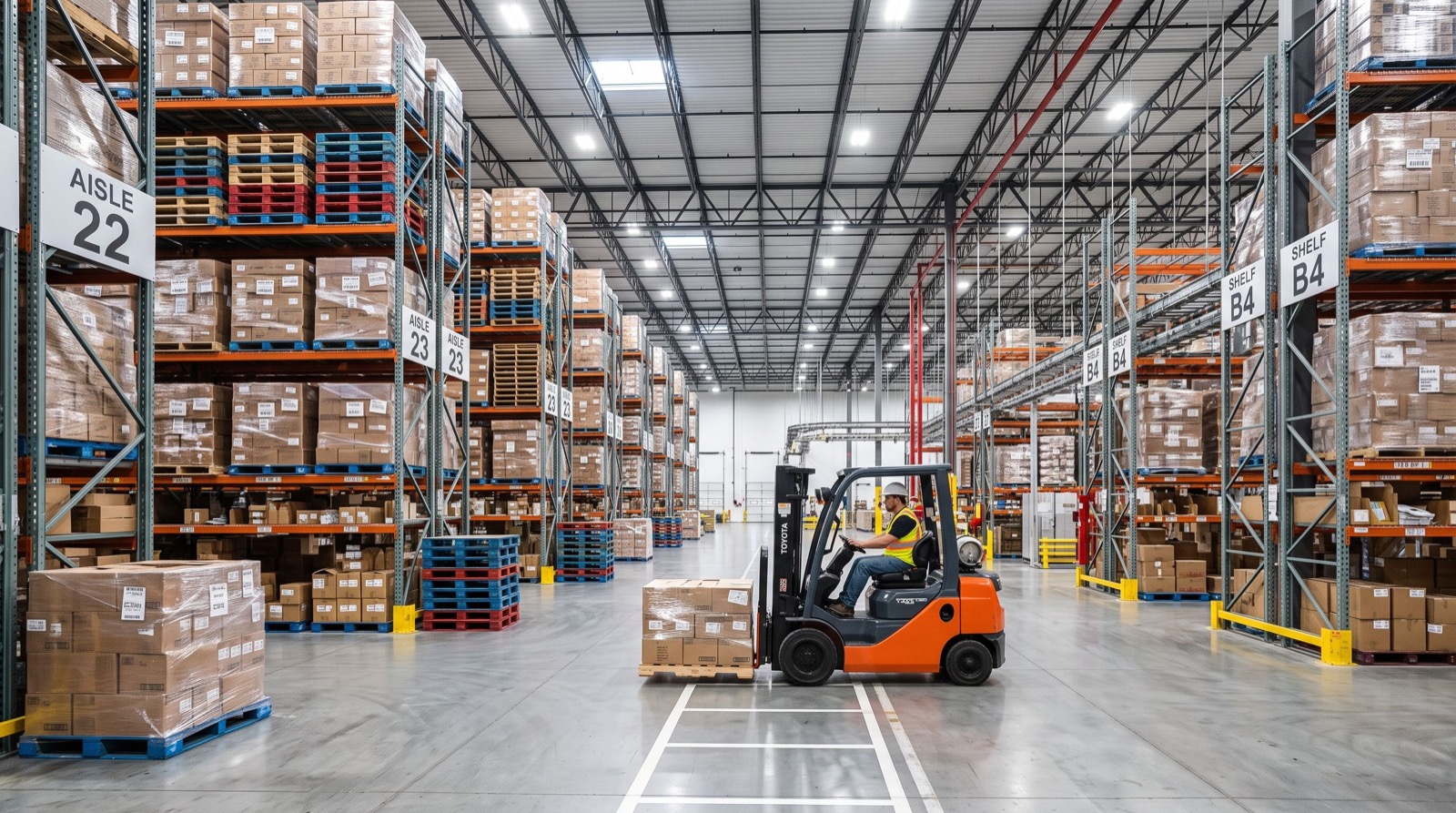

Warehouse managers juggling both food distribution and industrial maintenance inventory face an odd problem in 2026: their fastest-moving stock and their slowest-moving stock often need completely opposite storage strategies. Frozen Storage in Riyadh is built around speed, turnover, and strict temperature control, while spare parts storage is built around long-term preservation and precise retrieval. Running both under one roof without separating the logic behind each leads to wasted space and, eventually, lost inventory. Here’s how to think about each category properly.
Frozen Storage in Riyadh: Built for Turnover
Frozen capacity in the capital serves a fast-cycling supply chain. Meat, seafood, dairy-based desserts, and ready meals move from port or local processing into frozen storage and back out to retailers or food-service clients, often within days rather than weeks. That turnover speed means frozen facilities are judged on throughput — how quickly pallets move in and out — as much as on raw temperature stability.
A facility running at -18°C or colder still fails its purpose if loading bays are slow, if staff can’t locate the right pallet during a rush order, or if the facility can’t absorb a demand spike during Ramadan or a major catering event. Reliability in frozen storage in Riyadh is really a combination of three things: consistent cold-chain temperature, fast pallet retrieval, and enough buffer capacity for seasonal surges.
What a Power Outage Really Costs
Unlike ambient or dry goods, frozen inventory has almost no grace period. A sustained outage of a few hours can force a full write-off of a pallet that may represent thousands of riyals in imported seafood or meat. This is why backup generator testing — not just having a generator on paper — should be part of every contract review.
Storage for Spare Parts: Built for Precision, Not Speed
Storage for Spare Parts runs on an entirely different clock. Industrial maintenance teams, fleet operators, and manufacturing plants often hold spare components for months or years before they’re ever needed — but when a part is needed, it’s usually because a production line has stopped and every hour of downtime is expensive. That changes what “good” storage looks like: labeling accuracy, dust and corrosion protection, and a retrieval system that doesn’t require searching three warehouses during an emergency.
Many operators underestimate how much corrosion and dust damage accumulates in a poorly sealed Gulf warehouse over a two- or three-year holding period. A bearing or gasket that looks fine in month one can be unusable by month eighteen if humidity and dust aren’t controlled, even though the part was never physically touched.
Designing an Inventory System That Works for Both
- Separate fast-moving frozen SKUs from slow-moving spare parts physically, even within the same facility group.
- Use barcode or RFID tracking for spare parts specifically — manual logs fail during emergency retrievals.
- Schedule frozen storage audits weekly; schedule spare parts audits quarterly, since turnover rates differ so widely.
- Build a reorder threshold for critical spare parts so a part is never discovered “out of stock” during a breakdown.
- Track shelf-life for both categories — frozen goods by expiry date, spare parts by manufacturer-recommended storage life.
Software and Tracking Tools That Actually Help
A warehouse management system earns its cost fastest in exactly the scenario where manual tracking fails worst: an emergency spare parts retrieval during a production stoppage. Barcode or RFID-based systems let a maintenance technician search by part number, bin location, or even supplier reference in seconds rather than walking three aisles hoping to spot a familiar box.
For frozen inventory, the priority is slightly different — most operators get more value from automated temperature logging integrated with alerts than from a complex retrieval system, since the bigger risk is a slow temperature drift nobody notices until a routine check days later. Pairing the right tracking tool to the right risk, rather than buying one system for everything, is usually the better investment.
Frozen vs Spare Parts Storage: Side by Side
| Factor | Frozen Storage | Spare Parts Storage |
|---|---|---|
| Typical holding period | Days to weeks | Months to years |
| Primary risk | Power/temperature failure | Corrosion, dust, mislabeling |
| Retrieval urgency | Routine, scheduled | Often emergency, unscheduled |
| Audit frequency needed | Weekly | Quarterly |
| Key success metric | Throughput and temperature stability | Retrieval accuracy and part condition |
How Do You Choose a Facility for Mixed Inventory?
Start by asking any prospective facility how they physically separate frozen operations from dry or spare-parts holding areas — not just whether they offer both. A warehouse that treats every type of inventory the same way is a warning sign. The same logic applies when evaluating any specialist provider: whether you’re sourcing an experienced local team for a technical marketing project or a storage partner for mixed inventory, specialization inside the provider’s own operation usually predicts how well they’ll handle your specific category.
Ask for a walkthrough of both the frozen section and the dry parts section of any facility you’re considering. If the same staff, racking, and processes handle both without distinction, expect problems once your volumes grow.
Standards Worth Knowing in 2026
Saudi Arabia’s standards body, the Saudi Standards, Metrology and Quality Organization, publishes technical regulations covering storage, packaging, and handling practices that reputable facilities reference when designing both cold-chain and industrial storage processes. Facilities that can point to documented compliance with recognised standards tend to be far more consistent operators than those relying on informal practice alone.
Frequently Asked Questions
How is frozen storage in Riyadh priced compared to spare parts storage?
Frozen storage typically costs more per square metre because of continuous refrigeration and power redundancy requirements, while spare parts storage costs less but requires investment in labeling, shelving, and inventory software instead.
Can spare parts and frozen goods share the same warehouse?
Yes, many facilities in Riyadh operate both under one roof, but they should be physically zoned and managed with separate processes, since their risk profiles and audit schedules are completely different.
What is the biggest risk with long-term spare parts storage?
Corrosion and dust contamination are the most common issues, especially in Gulf climates, where humidity swings can degrade metal and rubber components even when parts are never physically handled.
How quickly can a facility recover from a power outage affecting frozen stock?
Well-run facilities test backup generators regularly and can usually restore full cooling within minutes, but always request documented recovery-time data rather than a verbal guarantee before signing.
Frozen storage in Riyadh and spare parts storage solve fundamentally different inventory problems, and the facilities that succeed at both treat them as separate disciplines rather than one generic warehousing service. Match your provider’s internal processes to your actual inventory mix, and you’ll avoid the costly surprises that catch most operators in their first year.